


Old Testament Orientation 1: Reflective Paper
Reflective Essay Assignment
Joo Won Lee
OBST 515: Old Testament Orientation 1
May 15, 2026
Introduction
In a manner set in a familiar Sophoclean tragic play that proceeds with a dramatic often shocking turn of events centered around a dark gloomy conspiracy of twisted plots and questionable characters, so grave and evil with backdrop of utterly depraved pagan secular culture, the significance of a heroic role which an orphan girl turned rescuer Queen Esther had played in her God-designated time and -appointed place on world stage, where the lives of hundreds of thousands of her people nation perilously hung on the balance, cannot be underestimated; on the contrary it was vital and necessary for the survival of her people who faced a certain extinction including herself.
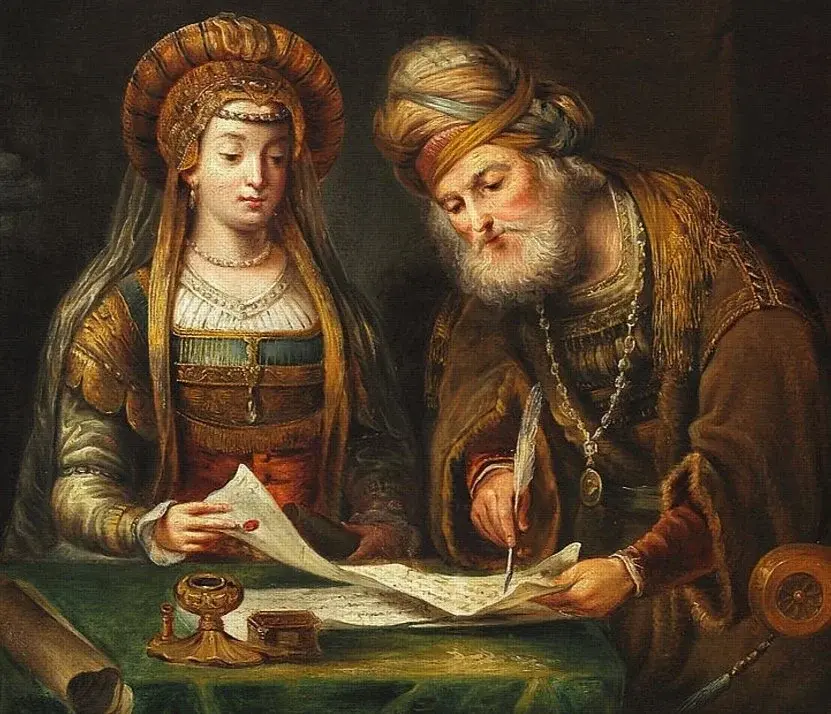
Significance of the Timing, the Place, and the Choice
In fact, Esther’s role was so crucial and significant that it was as if God had placed her at the Persian palace through every stages of her life leading up to the critical moment described in scripture with King Ahasuerus (Xerxes) extending his golden scepter to Esther (5:2), thusly implying the threat of genocide hanging over her people being potentially lifted. It is a lesson to all of us that believers could be living “in the world, but not of the world” as the author Hamilton alludes to on p. 543. Notwithstanding “Luther’s apprehension of the book” (p. 530), and “the lack of explicit mention of the name of Yahweh” (p. 539), the book is all about Yahweh’s timely Providence as the Deliverer, who appropriately intervenes through His chosen person for a special task at an appointed time and place to lift His Holy Name above all names. Astoundingly, once again we are left in wonderment since God’s grand salvific plan as in redemptive work of his chosen people certainly defies any human reasoning or logic. It was all meant to be as everything mattered.
Significance In and Through Your Life Today
Esther’s resolute assurance of “And if I perish, I will perish,” (v. 4:16) has been a rallying cry for All-Out Prayer Crusade for a particular cause throughout ages. Growing up in Seoul, South Korea in a conservative Presbyterian household, the story of Esther had been told over and over accompanied by v. 16.
Then and now, we Christians are surrounded by enemies on all sides much as the Jews and Esther, Mordecai were 2,500 years ago, e.g., Haman being a remnant of Amelkites (“Agagite”). We Christians should be mindful and confident of the fact that Yahweh is near and inside us if we only seek him out when we face such threats or predicaments of dire consequences. Our communal cohesive faith would prove to be as hardened and precious as burnished pure gold and diamond at the end.
Conclusion
The brave and enduring almost suicidal heroine act of Esther as encapsulated in immortal proclamation of “If I perish, then I will perish,” has served throughout the ages and still rings so true today as it serves as a motivation and template for the contemporary Christians in how to come together, face the dangers, threats of extermination, and plead with God, through whom there is nothing impossible. As every character mentioned in Jesus’ own genealogy did have a significance in their time and place, the role of Esther can be extended to each and every individual Christian living today in still God’s created and ruled sphere of governance.
Bibliography
Hamilton, Victor P. Handbook on the Historical Books: Joshua, Judges, Ruth, Samuel, Kings, Chronicles, Ezra-Nehemiah, Esther. Grand Rapids, MI: Baker Academic, 2001.



Comments